

Stress as a Relational Being
A meditation on resistance, mortality, and learning how just be


For years, through hours, months, entire chapters of my life, I tried to manage stress.
Like most people, I approached it as a problem to be solved. Something to reduce, regulate, bypass, or transcend. I read the books. Practiced the techniques. Meditated. Optimized routines. Built systems designed to keep stress at bay.
And yet, stress never left.
It only changed costumes.
At some point, I stopped seeing stress as a malfunction and began to experience it as something else entirely:
a relational object.
Psychology often speaks of relational objects as forces that shape us not because they disappear, but because they stay. Stress, I realized, is one of them.
It doesn’t simply visit us.
It relates to us.
The Mythic Nature of Stress
If stress were a person, it would not be subtle.
It would be the monster in ancient myths. The one that cannot be ignored.
The one that hunts rather than attacks.
The one that appears in different forms depending on who you are becoming.
In Greek mythology, it resembles Proteus, the shape-shifter who changes form whenever someone tries to capture him. In Buddhist imagery, it mirrors Mara, the force that distracts, tempts, and destabilizes right before awakening.
Stress behaves the same way.
You try to release it through rest, it reappears as guilt.
You dissolve it through productivity, it returns as pressure.
You meditate it away, and it resurfaces as existential dread.
Stress is not singular.
It is multi-dimensional, multi-personal, endlessly adaptive.
And when misunderstood, it becomes obsessive.
It can drive success or sabotage it.
It can fuel ambition or quietly consume a life.
Stress and Resistance Are the Same Thing
Eventually, one realization cut through everything else:
Without resistance, there is no stress.
Every form of stress points to something we are resisting:
A past we wish we could erase
A future that exists only in imagination
A loss we cannot undo
A version of ourselves we are afraid to become
A sensation in the body we tense against, numb out, or try to override
As Epictetus wrote nearly two thousand years ago:
“Men are disturbed not by things, but by the views which they take of things.”
Resistance is not new.
It has always been here.
What is new is the intensity with which the modern mind amplifies it.
The mind becomes a maestro, orchestrating tension across every domain of life:
The to-do list
Relationships
Identity
Time itself
The tune can be harmonious.
Or unbearably chaotic.
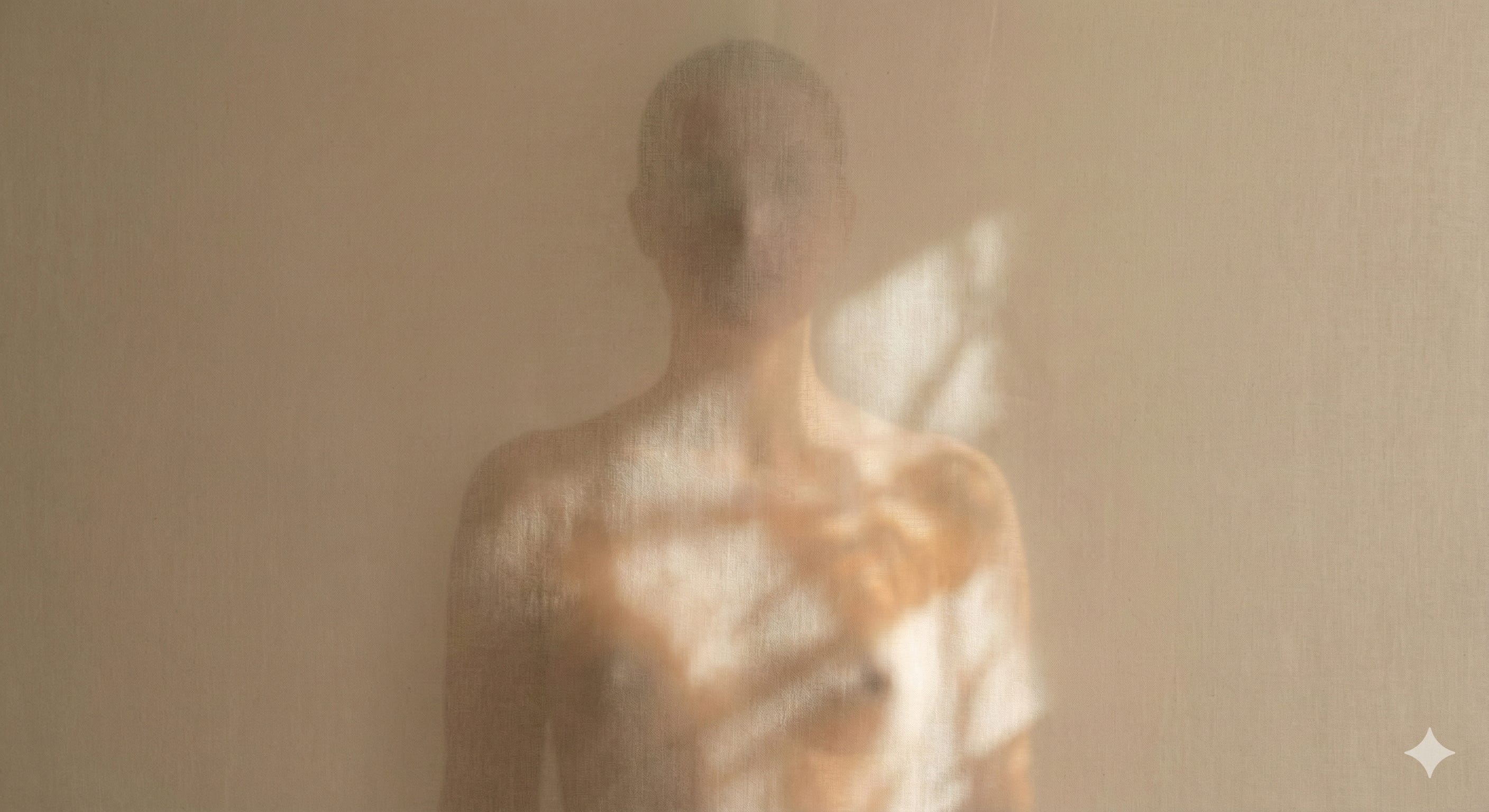
But stress, stripped of all its labels like fear, excitement, anger, frustration is simply resistance experienced in the body…
The Hidden Core: Mortality
During a ten-day silent retreat (Vipassana) back in 2021, something unexpected surfaced.
Beneath all my stress, beneath productivity, self-improvement, even healing, I found a deeper resistance:
Mortality.
Human history is, in many ways, a long attempt to negotiate with death.
We chase longevity, legacy, relevance, youth, meaning.
We want our names to remain. Our work to outlast us. Our bodies to delay decay.
Ernest Becker captured this precisely:
“The fear of death is the mother of all neurosis.”
Stress, at its deepest layer, is not about deadlines or obligations.
It is about impermanence.
And mysticism has always pointed toward the same paradox:
freedom does not come from defeating mortality, but from making peace with it.
Resistance in Healing Work
While training as a breathwork facilitator, we explored resistance through three lenses:
Mental resistance
Emotional resistance
Physical resistance
At first, this felt technical.
Then it became personal.
Resistance is not an obstacle to healing.
It is the gateway.
Most healing modalities aim to replace resistance with acceptance. And acceptance is often framed as liberation, a loosening the grip, untying the knots.
But over time, I saw something more subtle.
Acceptance is simply the other side of resistance.
Both are still movements of the ego:
I accept this
I reject that
Both remain relationally bound.
Beyond Acceptance: Being With
True freedom is not found in choosing between resistance and acceptance.
It is found in being with.
Being with discomfort.
Being with ease.
Being with fear and joy without privileging either.
Michael A. Singer articulates this with disarming clarity:
“Be okay with people liking you. Be okay with people not liking you. Be okay with the weather when it rains, and be okay when it doesn’t.”
Not acceptance.
Not resignation.
Just okayness.
Being with is not passive.
It is radically present.

Meditation Is Not a Skill
I recently attended a meditation course I almost avoided.
Part of me resisted. It felt too basic, too beginner-level. After years of practice, I believed I already “knew how to meditate.”
That belief was the resistance.
Meditation is not a skill to acquire.
It is not a technique to master.
It is the practice of meeting resistance without negotiation.
Meditation strips away becoming.
It confronts us with being.
And in that being, something dissolves. Not the mind, not thought, not stress, but the struggle with them.
Meditation, at its deepest, is learning to be okay with:
Being nobody
Being temporary
Being unfinished
Being dust
Not as a philosophy.
As a lived reality.
The Final Question
If resistance is not something to fix, then where do we begin?
Perhaps with a single daily inquiry:
What am I resisting right now?
Can I stay with this moment? without fixing, reframing, or escaping it?
Can we be with stress without trying to transcend it?
Can we be with discomfort without turning it into meaning?
Can we be with life as it is? unfinished, uncertain, impermanent?
Not accepting.
Not rejecting.
Just being.
And being okay with being okay.
Loved the different creative lenses to look at stress